
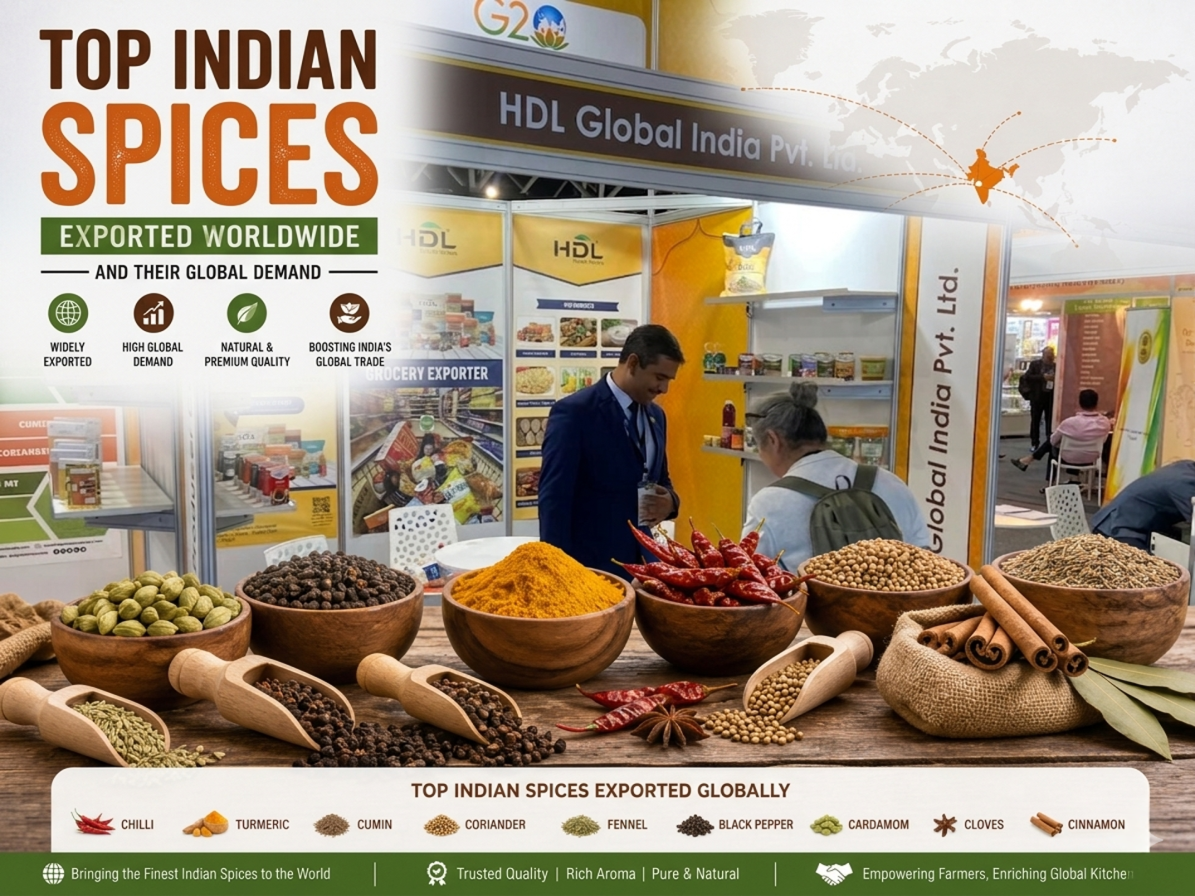
India’s identity as the “Land of Spices” is not just a cultural title—it is an economic powerhouse built over thousands of years. From ancient maritime trade routes to modern global logistics, Indian spices have shaped international cuisine, medicine, and trade. Today, the spices export from India stands as one of the strongest contributors to the country’s agricultural exports, supplying high-quality spices to more than 180 countries.
In this detailed blog, we will explore the top Indian spices exported worldwide, their uses, export trends, health benefits, and the growing global demand for Indian spices.
Introduction to India’s Spice Export Industry
India produces a vast variety of spices due to its diverse climate and soil conditions. From the tropical regions of Kerala to the dry lands of Rajasthan and Gujarat, each area contributes unique flavors to the global spice basket.
The spices export business India has seen consistent growth due to:
- Strong agricultural base
- Skilled farmers and traditional knowledge
- Government support through export policies
- Rising demand for natural and organic products
India is also a leader in organic Indian spices export, catering to international markets that demand chemical-free, sustainably grown spices.
Why Indian Spices Are Popular Worldwide
The rising global demand for Indian spices is driven by several important factors:
1. Rich Flavor and Aroma
One of the biggest reasons behind the popularity of Indian spices is their unmatched flavor and aroma. India’s diverse climate—from tropical to arid—allows the cultivation of spices with intense essential oils, which enhance both taste and fragrance.
Why Indian Spices Taste Better:
- High Essential Oil Content: Spices like cumin, cardamom, and black pepper contain natural oils that give them a stronger aroma compared to spices grown in other regions.
- Traditional Farming Practices: Many Indian farmers still use age-old cultivation methods, preserving the natural quality of spices.
- Variety and Diversity: India produces over 50+ types of spices, each with unique taste profiles.
Global Impact:
International cuisines—such as Middle Eastern, Asian, African, and even Western fusion foods—depend on Indian spices to create depth and complexity in dishes. This is a major reason why popular Indian spices worldwide are always in high demand.
2. Health Benefits and Medicinal Value
Indian spices are not just flavor enhancers—they are also powerful natural medicines. This is deeply rooted in traditional systems like Ayurveda, where spices are used for healing and overall wellness.
Key Health Benefits:
- Turmeric: Contains curcumin, known for anti-inflammatory and immunity-boosting properties
- Ginger: Helps digestion, reduces nausea, and improves immunity
- Cloves: Have antibacterial and pain-relieving properties
- Cinnamon: Helps regulate blood sugar levels
Growing Wellness Industry:
Globally, people are shifting toward natural and plant-based products. This has increased the use of spices in:
- Herbal teas and supplements
- Organic health products
- Skincare and beauty treatments
As a result, the global demand for Indian spices has expanded beyond food into health and wellness sectors.
3. Cultural Influence and Globalization of Indian Cuisine
Indian cuisine has gained massive popularity worldwide, and spices are at the heart of it. Dishes like paneer tikka, biryani, curry, and masala chai have become global favorites.
Factors Driving Cultural Influence:
- Indian Diaspora: Millions of Indians living abroad have introduced their cuisine to global audiences
- Restaurants and Food Chains: Indian restaurants are expanding rapidly across countries
- Food Shows and Social Media: Platforms like YouTube and Instagram have popularized Indian cooking
Result:
As more people try Indian dishes, the demand for authentic ingredients increases. This directly boosts the need for popular Indian spices worldwide.
4. Strong Export Infrastructure and Global Reach
India has developed a robust export ecosystem that supports spice trade globally.
Key Strengths:
- Well-established supply chains
- Advanced processing and packaging facilities
- Government support through export promotion councils
- Compliance with international quality standards
This has helped scale the spices export business India, ensuring consistent supply to global markets.
This is why popular Indian spices worldwide continue to dominate international markets.
Top Indian Spices Exported Worldwide
Let’s explore the most exported spices from India in detail:
Top Indian Spices Exported Worldwide
1. Turmeric – The Golden Superfood
Turmeric, popularly known as “Haldi” in India, is one of the most important and widely exported spices from the country. It holds a unique position not only in Indian kitchens but also in global health and wellness industries. India is the largest producer and exporter of turmeric, supplying high-quality varieties to countries such as the USA, UAE, UK, Germany, and Bangladesh. The bright yellow color and earthy flavor of turmeric make it an essential ingredient in cooking, especially in curries, rice dishes, and sauces. Beyond culinary use, turmeric plays a significant role in traditional medicine systems like Ayurveda, where it is used for healing wounds, boosting immunity, and improving digestion..
Key Export Markets:
USA, UAE, UK, Germany, Bangladesh
Uses:
- Cooking and food coloring
- Ayurvedic medicine
- Cosmetics and skincare
The growth of organic Indian spices export has further boosted turmeric sales worldwide.
2. Black Pepper – The King of Spices
Black pepper has a long and rich history in global trade and is often referred to as the “King of Spices.” India, particularly regions like Kerala, produces premium-quality black pepper that is highly valued worldwide. Countries such as Vietnam, the USA, Europe, and the Middle East are major importers of Indian black pepper. Its sharp flavor and strong aroma make it a staple ingredient in kitchens across the globe
Major Export Destinations:
Vietnam, USA, Europe, Middle East
Uses:
- Seasoning and flavoring
- Processed food industry
- Medicinal products
Black pepper remains one of the popular Indian spices worldwide, playing a key role in the spices export business India.
3. Cardamom – The Queen of Spices
Cardamom is known as the “Queen of Spices” due to its unique aroma, sweet flavor, and premium value. India is one of the leading producers and exporters of cardamom, especially small green cardamom, which is highly prized in international markets. Major export destinations include Saudi Arabia, UAE, Kuwait, and the USA, where it is widely used in traditional dishes and beverages.
Export Markets:
Saudi Arabia, UAE, Kuwait, USA
Uses:
- Sweets and desserts
- Tea and beverages
- Perfumes
Due to its premium nature, cardamom contributes significantly to the value of spices export from India.
4. Cumin – The Global Kitchen Staple
Cumin is one of the most widely used spices in the world, and India is the largest exporter of cumin seeds. Countries such as China, the USA, UAE, and Vietnam are major importers of Indian cumin. Known for its warm, earthy flavor, cumin is a key ingredient in many global cuisines, including Indian, Mexican, and Middle Eastern dishes.
Key Markets:
China, USA, UAE, Vietnam
Uses:
- Spice blends
- Ready-to-eat meals
- Snacks and sauces
Cumin’s consistent demand strengthens the global demand for Indian spices and supports long-term export growth.
5. Red Chili – The Spice of Heat
Indian red chilies are famous worldwide for their vibrant color, strong flavor, and varying levels of pungency. India exports large quantities of red chilies to countries like China, Thailand, the USA, and Bangladesh. These chilies are an essential ingredient in many cuisines, adding heat and color to dishes..
Export Destinations:
China, Thailand, USA, Bangladesh
Uses:
- Sauces and condiments
- Snack industry
- Pickles
Red chili is one of the most traded and popular Indian spices worldwide, contributing heavily to the spices export business India.
6. Coriander – Mild and Aromatic
Coriander is a versatile spice known for its mild flavor and pleasant aroma. India is a leading exporter of coriander seeds, supplying to markets such as Malaysia, UAE, Sri Lanka, and the UK. Its subtle taste makes it suitable for a wide range of dishes, from curries to spice blends.
Export Markets:
Malaysia, UAE, Sri Lanka, UK
Uses:
- Curry powders
- Spice blends
- Processed foods
The increasing preference for natural food products has boosted organic Indian spices export of coriander.
7. Cloves – High-Value Spice
Cloves are a high-value spice known for their strong aroma and medicinal properties. India exports cloves to major markets such as the USA, Europe, and the Middle East. They are widely used in cooking, baking, and spice blends, adding a warm and slightly sweet flavor to dishes.
Major Markets:
USA, Europe, Middle East
Uses:
- Baking and cooking
- Dental care
- Pharmaceuticals
Cloves contribute to the rising global demand for Indian spices due to their multiple uses.
8. Ginger – A Global Health Ingredient
Ginger is one of the most widely consumed spices in the world, and India is a major exporter of both fresh and processed ginger. Key export destinations include the USA, UK, Netherlands, and Saudi Arabia. Ginger is highly valued for its strong flavor and numerous health benefits.
Export Destinations:
USA, UK, Netherlands, Saudi Arabia
Uses:
- Herbal drinks
- Cooking
- Medicine
Ginger is in high demand due to its health benefits, boosting the spices export from India.
9. Fenugreek – Nutritional Powerhouse
Fenugreek is gaining recognition in international markets due to its nutritional and medicinal benefits. India exports fenugreek to countries like Egypt, UAE, and Nepal. It is widely used in traditional cooking, especially in Indian and Middle Eastern cuisines.
Export Markets:
Egypt, UAE, Nepal
Uses:
- Health supplements
- Traditional dishes
- Herbal medicine
It is becoming one of the popular Indian spices worldwide due to its nutritional value.
10. Mustard Seeds – Multi-Purpose Spice
Mustard seeds are an essential part of Indian cooking and are also widely used in oil production. India exports mustard seeds to countries such as the USA, Canada, and various European nations. These seeds are used in cooking, pickling, and food processing industries.
Export Destinations:
USA, Canada, Europe
Uses:
- Cooking oil
- Pickles
- Food processing
Mustard supports the growth of the spices export business India due to its versatility.
Growth Drivers of Indian Spice Exports1. Rising Demand for Organic Products
Consumers prefer chemical-free spices, boosting organic Indian spices export.
Challenges in Spice Export
Despite strong growth, exporters face challenges:
- Strict international regulations
- Quality control requirements
- Price fluctuations
- Competition from other countries
However, Indian exporters continue to innovate and maintain their global position.
How to Start a Spice Export Business in India
If you are planning to enter the spices export business India, here are basic steps:
- Register your business
- Obtain IEC (Import Export Code)
- Choose target markets
- Ensure quality certification
- Build supplier network
- Partner with logistics providers
With the right strategy, this sector offers huge profit potential.
Conclusion
Indian spices have a global legacy and a strong future. From turmeric and cumin to cardamom and cloves, the variety and quality make India a leader in the global spice trade.
The growing global demand for Indian spices, combined with the expansion of organic Indian spices export, ensures long-term growth for exporters. As international markets continue to embrace Indian flavors, the spices export from India will remain a key driver of economic success.
Whether you are a business owner, exporter, or food enthusiast, understanding the power of popular Indian spices worldwide gives you valuable insight into one of the most dynamic industries in the world.