
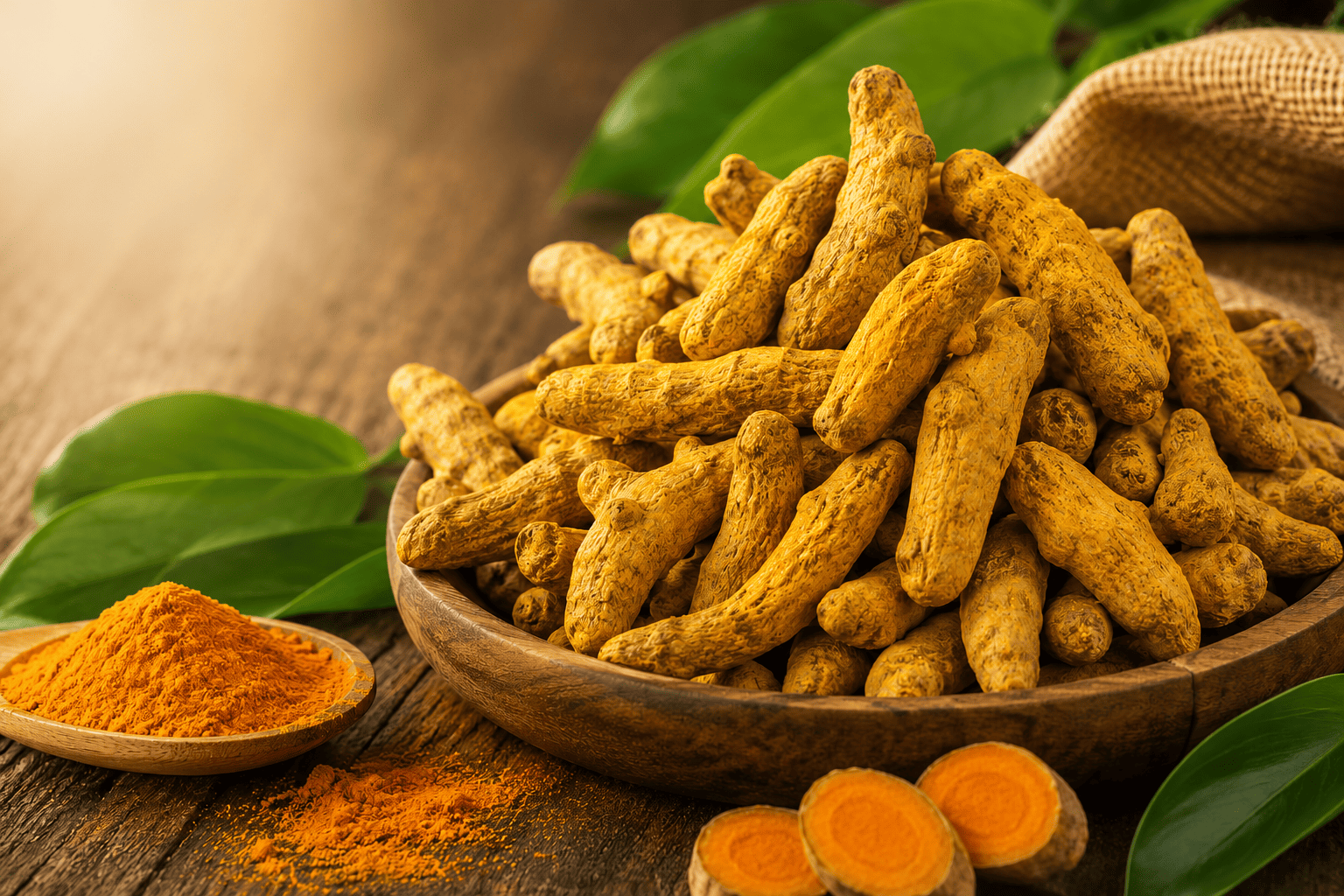
The global demand for organic food products and natural wellness ingredients has grown significantly over the past decade. As a result, traditional spices with proven health benefits have gained tremendous popularity across international markets. Among these, organic turmeric has emerged as one of the most valuable agricultural commodities due to its exceptional nutritional and medicinal properties.
In particular, the demand for organic turmeric finger export from India continues to rise in countries such as the United States, Germany, the United Kingdom, the Netherlands, Australia, Canada, and the Middle East. Consumers are increasingly choosing organic turmeric because it is free from synthetic pesticides, rich in curcumin, and produced using environmentally sustainable farming methods.
Furthermore, India remains the world’s largest producer and exporter of turmeric, contributing nearly 80% of the global supply. The country’s favorable climate, fertile soil, traditional farming practices, and advanced processing infrastructure enable exporters to supply premium-quality organic turmeric to buyers worldwide.
Whether you are an importer, wholesaler, food manufacturer, retailer, or nutraceutical company, partnering with a reliable Indian Food Exporter ensures consistent product quality, competitive pricing, and smooth international delivery.
This comprehensive guide explains everything you need to know about sourcing premium organic turmeric fingers from India, including cultivation regions, processing methods, export standards, quality parameters, and international shipping procedures.
Why Indian Organic Turmeric Fingers Rule the Global Market
Organic turmeric fingers are the mature secondary rhizomes of the Curcuma longa plant. They are carefully harvested, cleaned, and processed to preserve their natural color, aroma, and curcumin content. Because of their superior quality, Indian turmeric fingers are highly preferred by food manufacturers, spice brands, pharmaceutical companies, and nutraceutical industries worldwide.
Moreover, Indian organic turmeric is widely recognized for its high curcumin concentration. Curcumin is the primary bioactive compound responsible for turmeric’s anti-inflammatory, antioxidant, and immune-supporting properties. Higher curcumin levels directly increase the commercial value of turmeric in international markets.
Another major advantage is India’s diverse cultivation regions. Different states produce unique turmeric varieties that meet specific industrial requirements.
Major Organic Turmeric Growing Regions in India
- Maharashtra – India’s largest turmeric-producing state with consistent export-quality production.
- Telangana – Famous for premium Nizamabad and Jagtial turmeric fingers.
- Tamil Nadu – Home to the internationally recognized Salem and Erode varieties.
- Meghalaya – Produces the premium Lakadong turmeric with exceptionally high curcumin content.
Consequently, international buyers can choose different turmeric varieties based on their intended applications.
Popular Export Varieties
Salem & Erode Turmeric
These varieties are known for their attractive golden-yellow color, smooth appearance, and excellent polishing quality. Therefore, they are widely used by retail spice brands for whole turmeric packaging.
Nizamabad & Rajapuri Bold
These turmeric fingers are thicker and heavier than many other varieties. As a result, they provide better grinding yields and are highly preferred by spice processing industries.
Lakadong Turmeric
Lakadong turmeric is cultivated in the clean, high-altitude regions of Meghalaya. Moreover, it naturally contains 7–9% curcumin, making it one of the world’s finest turmeric varieties. Pharmaceutical and nutraceutical manufacturers actively source Lakadong because of its exceptional medicinal value.
By partnering with an experienced exporter specializing in Indian Grocery Exports, buyers gain access to multiple turmeric varieties, transparent sourcing, competitive pricing, and reliable year-round supply.
The Growth Blueprint of Indian Spices Exports
India’s spice export industry has transformed dramatically over the past few decades. Previously, most spice trading relied on local markets and traditional distribution systems. However, modern agriculture, advanced processing facilities, and international quality standards have completely changed the industry.
Today, Indian spice exporters operate highly organized supply chains that comply with the strict food safety regulations of global markets.
Furthermore, organizations such as the Spices Board of India and the National Turmeric Board actively support farmers through training programs, quality inspections, and export guidance. These initiatives encourage sustainable farming practices while reducing the use of synthetic fertilizers and chemical pesticides.
As a result, certified organic turmeric from India consistently meets the quality requirements of international buyers.
The country’s strong agricultural infrastructure, experienced exporters, and internationally recognized certifications have established India as the most trusted source of premium organic turmeric.
Processing Standards: From Farm to Freight
Maintaining premium quality requires careful handling after harvesting. Therefore, every stage of processing follows strict hygiene standards to preserve the turmeric’s natural color, aroma, and curcumin content.
1. Washing and Boiling
Immediately after harvesting, workers thoroughly wash the turmeric fingers to remove soil, stones, and other impurities.
Next, they gently boil the turmeric in clean water or steam. This process softens the rhizomes, removes the raw odor, and develops the characteristic golden-yellow color.
Additionally, boiling improves product stability and prepares the turmeric for uniform drying.
2. Sun Drying
After boiling, workers spread the turmeric fingers across clean, elevated drying platforms under controlled natural sunlight.
During the drying process, they regularly turn the fingers to ensure even moisture removal.
As a result, the moisture content gradually falls below 10%, which is considered ideal for long-term storage and international shipping.
Consequently, the risk of mold formation, fungal growth, and product spoilage is significantly reduced.
3. Mechanical Polishing
Once the drying process is complete, the turmeric fingers move to mechanical polishing units.
Here, rotating polishing drums gently remove the rough outer skin without damaging the product.
Therefore, the turmeric develops a smooth surface, brighter color, and more attractive appearance.
Depending on customer requirements, exporters offer:
- Single Polished Turmeric
- Double Polished Turmeric
Both grades meet international export standards and retail packaging requirements.
4. Precision Sorting and Grading
Finally, trained professionals inspect every batch using advanced color-sorting machines and manual quality checks.
During this stage, workers remove broken fingers, damaged rhizomes, foreign particles, and other defects.
Consequently, only premium-quality turmeric fingers are packed for export.
This strict grading process ensures uniform size, consistent color, and superior quality while meeting the expectations of international buyers.
Quality Metrics Checklist for International Buyers
When sourcing organic turmeric finger export from India, buyers should clearly define product specifications before placing an order. This approach helps ensure product consistency, regulatory compliance, and customer satisfaction. Moreover, working with a certified Indian food exporter minimizes quality-related risks and simplifies the import process.
Before finalizing your purchase, verify the following quality parameters:
| Quality Parameter | Premium Export Standard |
| Organic Certification | USDA Organic, NPOP, or EU Organic |
| Curcumin Content | 3%–7%+ (Depending on Variety) |
| Moisture Content | Maximum 9–10% |
| Foreign Matter | Maximum 0.5% |
| Defective Rhizomes | Maximum 2–3% |
| Color | Bright Golden Yellow |
| Purity | 99% or Higher |
Additionally, request recent laboratory test reports to verify curcumin levels, moisture content, pesticide residue, and microbiological safety. These reports increase buyer confidence and help ensure compliance with international food safety regulations.
Benefits of Choosing an Experienced Indian Food Exporter
Selecting the right exporter is just as important as choosing the right turmeric variety.
A professional exporter offers several advantages, including:
- Direct farm sourcing
- Certified organic products
- Consistent quality
- Competitive pricing
- Customized packaging
- Private labeling services
- Complete export documentation
- Global logistics support
- Timely shipment
- Responsive customer service
Furthermore, experienced exporters understand the import regulations of different countries, making the entire procurement process more efficient.
Why Consolidated Agri Product Sourcing Makes Business Sense
Many international buyers prefer sourcing multiple food products from one supplier.
For example, a trusted exporter can supply organic turmeric along with Indian pulses, spices, grains, and grocery products in a single shipment.
As a result, buyers enjoy several business advantages:
- Lower freight costs
- Reduced customs paperwork
- Faster procurement
- Better inventory planning
- Single supplier management
- Improved supply chain efficiency
Whether shipping through LCL (Less than Container Load) or FCL (Full Container Load), consolidated sourcing reduces overall logistics costs.
Why Global Buyers Trust Indian Organic Turmeric
India continues to dominate the global turmeric market for several important reasons.
- Rich agricultural heritage
- Favorable climate
- Naturally high curcumin varieties
- Certified organic farming
- Advanced processing facilities
- Competitive export pricing
- Reliable year-round availability
- International quality certifications
Therefore, businesses across the food, pharmaceutical, nutraceutical, cosmetic, and wellness industries continue to choose Indian organic turmeric.
FAQ’s :
Indian organic turmeric is known for its high curcumin content, vibrant color, superior aroma, and internationally recognized organic certifications. As a result, it is widely preferred in global markets.
Premium export-quality organic turmeric usually contains a moisture level below 10%, helping prevent mold growth during storage and shipping.
Common certifications include USDA Organic, EU Organic, NPOP, Phytosanitary Certificate, Certificate of Origin, and Organic Transaction Certificate.
Major importers include the United States, Canada, Germany, the United Kingdom, Australia, the Netherlands, the UAE, and several European countries.
Look for exporters with organic certifications, proven export experience, transparent sourcing, laboratory-tested products, customized packaging options, and reliable international logistics support.
Conclusion
In conclusion, India remains the world’s leading supplier of premium-quality organic turmeric fingers. Furthermore, certified Indian exporters combine traditional farming knowledge with modern processing techniques to deliver products that meet global food safety standards.
Whether you are an importer, wholesaler, retailer, food manufacturer, or nutraceutical company, sourcing organic turmeric finger export from India provides long-term value through superior quality, competitive pricing, and dependable supply.
Ultimately, partnering with a trusted Indian food exporter allows your business to meet the growing worldwide demand for clean-label, pesticide-free, and sustainably sourced turmeric while building a reliable global supply chain.