
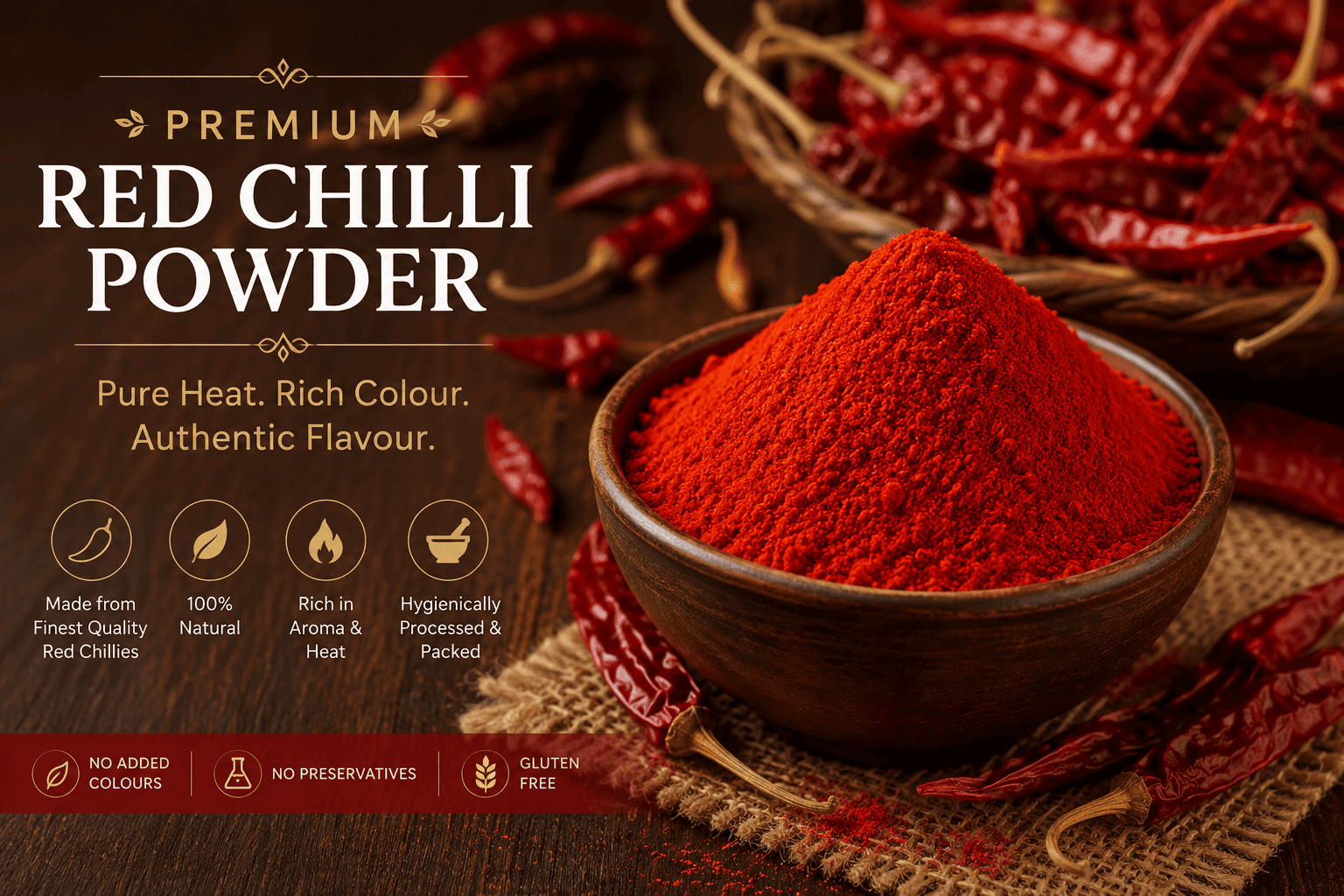
Red chilli powder is one of the most demanded spices in the global food industry. From restaurants and food manufacturers to supermarkets and private-label brands, businesses across the world rely on high-quality chilli powder to maintain consistent flavor, color, and aroma in their products.
However, selecting premium red chilli powder for wholesale is more than comparing prices. The quality of the spice directly impacts customer satisfaction, product consistency, food safety, and brand reputation. Choosing the right supplier ensures that you receive products meeting international standards while supporting long-term business growth.
India has established itself as the world’s leading producer and exporter of spices. Businesses looking for reliable sourcing often partner with an experienced Indian Food Exporter because of India’s extensive farming network, advanced processing facilities, and strict quality control.
This guide explains everything wholesale buyers should know before purchasing premium red chilli powder.
Why Premium Red Chilli Powder Matters
Not all chilli powders are created equally.
Premium-grade red chilli powder delivers consistent:
- Bright natural color
- Rich aroma
- Balanced pungency
- Fresh taste
- Longer shelf life
- Better food safety standards
Poor-quality chilli powder may contain impurities, artificial colors, excess moisture, or inconsistent heat levels. These issues can affect the final food product and reduce customer trust.
For wholesalers, importers, and distributors, quality should always be the first priority.
Understanding Different Types of Red Chilli Powder
India produces several varieties of red chillies, each offering unique characteristics.
| Variety | Color | Heat Level | Common Applications |
| Byadgi | Deep Red | Mild | Food coloring, spice blends |
| Guntur | Bright Red | High | Curry powders, sauces |
| Kashmiri | Vibrant Red | Mild | Restaurants, packaged foods |
| Teja | Dark Red | Very High | Processed foods, seasoning |
Different markets have different preferences.
European buyers often prefer vibrant color with moderate heat.
Middle Eastern markets may require stronger pungency.
African buyers usually look for cost-effective, flavorful varieties.
Understanding your customer base helps you select the right chilli powder.
Factors to Consider Before Buying Wholesale Red Chilli Powder
1. Color Quality
The appearance of chilli powder is one of the first indicators of quality.
Premium products should have:
- Uniform bright red color
- No artificial dyes
- Natural appearance
- Consistent shade
Natural color retention is important for food manufacturers and retail brands.
2. Aroma
Fresh chilli powder has a strong natural aroma.
A weak smell often indicates:
- Old stock
- Improper storage
- Low-quality raw materials
Always request samples before placing large wholesale orders.
3. Pungency Level
Heat is measured using the Scoville Heat Unit (SHU).
Different applications require different heat levels.
Examples include:
- Mild chilli powder for snacks
- Medium heat for sauces
- High pungency for spice blends
- Extra-hot varieties for industrial food manufacturing
Discuss your exact requirements with your supplier.
4. Moisture Content
Lower moisture means:
- Longer shelf life
- Reduced microbial growth
- Better storage stability
Premium exporters maintain moisture within internationally accepted standards.
5. Purity
High-quality red chilli powder should be free from:
- Dust
- Sand
- Artificial colors
- Foreign particles
- Adulterants
Laboratory testing ensures product purity before shipment.
Importance of Food Safety Certifications
Global buyers increasingly demand certified products.
Reliable suppliers usually comply with standards such as:
- ISO Certification
- HACCP
- FSSAI
- FDA Registration (where applicable)
- Export Inspection Standards
These certifications demonstrate commitment to food safety and quality.
Why India is the Preferred Source for Red Chilli Powder
India contributes significantly to global spice production.
Several factors make India the preferred sourcing destination:
- Diverse chilli varieties
- Large agricultural production
- Competitive pricing
- Modern processing units
- Global export experience
- Reliable logistics network
Many businesses working in international food exports choose Indian suppliers because of their consistent product quality and export expertise.
The Growing Global Demand for Indian Spices
Consumers worldwide are increasingly exploring authentic international cuisines.
This trend has significantly increased demand for Indian Spices exports, especially products like red chilli powder, turmeric, coriander, cumin, and blended seasonings.
As food manufacturers continue developing ethnic and fusion food products, demand for premium-quality Indian spices is expected to grow steadily in international markets.
Red Chilli Powder and the Expanding Indian Grocery Market
Global demand for authentic Indian grocery products continues to rise.
Today, supermarkets, ethnic grocery stores, and online retailers source a wide range of products through Indian grocery exports, including spices, flours, pulses, pickles, snacks, and ready-to-cook ingredients.
High-quality red chilli powder remains one of the fastest-moving products within this category due to its everyday culinary use.
Why Long-Term Supplier Relationships Matter
Building long-term partnerships offers several advantages:
- Consistent product quality
- Better pricing
- Reliable inventory
- Faster communication
- Priority production scheduling
- Customized packaging
- Improved supply chain stability
Strong supplier relationships help businesses scale confidently while minimizing sourcing risks.
Frequently Asked Questions (FAQ‘s)
Evaluate color, aroma, pungency, moisture content, purity, certifications, packaging quality, and supplier reputation.
Popular export varieties include Byadgi, Guntur, Kashmiri, and Teja. The ideal choice depends on your target market’s preference for color and heat.
It is commonly packed in moisture-resistant pouches, PP bags, laminated bags, or customized private-label packaging in various sizes.
India offers diverse chilli varieties, advanced processing facilities, competitive pricing, and extensive experience in global spice exports.
Yes. Many exporters provide private labeling, customized packaging, and branding solutions for wholesale buyers.
Store it in a cool, dry place away from direct sunlight and moisture while keeping the packaging tightly sealed after use.
Conclusion
Choosing premium red chilli powder for wholesale requires careful evaluation of quality, purity, certifications, packaging, and supplier reliability. While pricing remains important, long-term value comes from consistent quality, food safety, and dependable supply.
India continues to be a preferred sourcing destination due to its diverse chilli varieties, advanced processing capabilities, and strong export infrastructure. Businesses partnering with an experienced Indian Food Exporter gain access to premium-quality spices that meet international market expectations.
Whether you are an importer, distributor, retailer, or food manufacturer, investing in high-quality red chilli powder helps maintain product consistency, strengthen customer trust, and support sustainable business growth in today’s competitive global marketplace.