
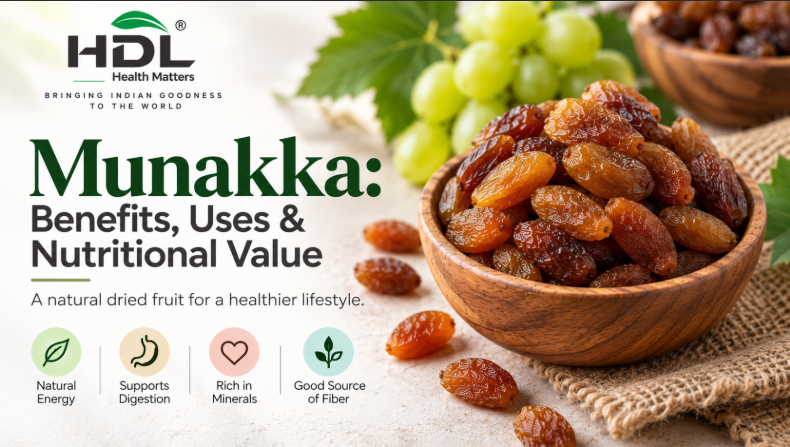
Munakka is a traditional Indian dried fruit made from large varieties of grapes. It is naturally sweet, chewy, and commonly used in Indian households. Munakka can be eaten directly, soaked overnight, added to milk, or used in desserts and traditional recipes.
Because it contains natural carbohydrates, dietary fiber, and minerals, munakka can be a useful addition to a balanced diet.
With the growing popularity of Indian food products worldwide, traditional products like munakka are also becoming relevant in global grocery markets. The growth of Indian grocery exports has helped bring Indian dry fruits and other traditional foods to international consumers.
What Is Munakka?
Munakka is a type of dried grape that is generally larger than regular raisins. It may contain seeds and has a soft, chewy texture.
Quick Facts
- Origin: Traditionally associated with South Asian cuisine
- Food type: Dried fruit
- Main ingredient: Grapes
- Taste: Naturally sweet
- Texture: Soft and chewy
- Common use: Snacks, milk, desserts, traditional recipes
Munakka Nutritional Value
Munakka contains several nutrients that can contribute to a balanced diet.
| Nutrient | Benefit |
| Carbohydrates | Provides energy |
| Fiber | Supports digestion |
| Potassium | Supports normal muscle function |
| Iron | Helps support normal blood health |
| Copper | Supports normal body functions |
| Natural sugars | Provides quick energy |
Because the water is removed during drying, nutrients and natural sugars become concentrated. Therefore, munakka should be eaten in moderate portions.
Benefits of Munakka
1. Provides Natural Energy
Munakka contains natural carbohydrates and sugars. This makes it a convenient source of energy between meals.
2. Contains Dietary Fiber
The fiber in munakka can support normal digestive function. It can be included as part of a diet containing fruits, vegetables, whole grains, and other fiber-rich foods.
3. Provides Potassium
Munakka contains potassium, an important mineral involved in normal muscle and nerve function.
4. Contains Iron
Munakka provides some iron. Iron is important for normal hemoglobin production and oxygen transport.
5. Contains Natural Plant Compounds
Grapes naturally contain plant compounds. Some of these compounds remain in dried grapes after processing.
7. Traditional Indian Food
Munakka has been used in Indian food traditions for generations. Its natural sweetness makes it useful in both everyday and festive recipes.
How to Eat Munakka?
There are several simple ways to consume munakka.
Soaked Munakka
Wash the required amount and soak it in water overnight. The fruit becomes softer and easier to chew.
Munakka is a type of dried grape that is commonly used in Indian households. Generally, it is larger than regular raisins and may contain seeds. Its soft, chewy texture and naturally sweet taste make it suitable for snacks, milk, desserts, and traditional recipes.Add chopped munakka to:
- Oats
- Cereal
- Yogurt
- Porridge
- Granola
- Smoothies
Munakka in Desserts
It can also be used in Indian sweets, rice dishes, puddings, cakes, and other desserts.
Munakka vs Raisins
Although both munakka and raisins are dried grapes, they are not always the same.
| Feature | Munakka | Raisins |
| Size | Usually larger | Usually smaller |
| Seeds | May contain seeds | Often available seedless |
| Texture | Soft and chewy | Varies |
| Taste | Rich and sweet | Sweet |
| Uses | Traditional foods, snacks | Baking, cooking, snacks |
Both are concentrated dried fruits, so moderate consumption is recommended.
Best Ways to Use Munakka
Munakka is a versatile ingredient.
You can use it in:
- Traditional Indian sweets
- Breakfast bowls
- Milk drinks
- Trail mixes
- Bakery products
- Desserts
- Rice dishes
- Homemade energy snacks
Its natural sweetness can add flavor without requiring large amounts of added sugar.
Munakka for the Global Food Market
The demand for traditional Indian food products is increasing in many international markets. Indian exporters supply a wide range of products, including spices, pulses, grains, snacks, and dried fruits.
The growing Indian Food Exporter industry provides international buyers with access to authentic Indian food products.
At the same time, Indian Spices exports and Indian Pulses exports continue to form important categories within India’s food trade.
For retailers and distributors, products such as munakka can complement broader Indian grocery product ranges.
The expansion of international food exports is also helping Indian food businesses reach supermarkets, wholesalers, distributors, and ethnic grocery stores in different countries.
Why Choose Indian Food Products?
Indian food products are popular because of their traditional flavors, variety, and versatility.
A reliable Indian Food Exporter can help international buyers source products with:
- Consistent quality
- Suitable packaging
- Proper labeling
- Export documentation
- Reliable supply
- Product traceability
- Appropriate shelf-life management
For international buyers, these factors are important when selecting dried fruits and other packaged food products.
How to Store Munakka
Proper storage helps maintain freshness and quality.
- Keep munakka in an airtight container.
- Store it in a cool and dry place.
- Keep it away from moisture.
- Avoid direct sunlight.
- Follow the storage instructions on the package.
- Check for unusual odor, mold, or excessive moisture before consumption.
FAQ’s:
Munakka can be part of a balanced diet because it provides carbohydrates, dietary fiber, and some minerals. However, it is concentrated in natural sugars and calories, so portion size matters.
Yes. Soaking softens munakka and can make it easier to chew.
Yes. Munakka is generally larger and may contain seeds, while raisins are often smaller and commonly available in seedless varieties.
Store it in an airtight container in a cool, dry place. Follow the package storage instructions for best results.
Yes. Munakka can be combined with milk and other dry fruits for a convenient snack or breakfast option.
Munakka can be eaten as a snack or used in milk, desserts, breakfast foods, Indian sweets, rice dishes, bakery products, and snack mixes.
Conclusion
Munakka is a traditional dried fruit with a naturally sweet flavor and versatile culinary uses. It provides carbohydrates, dietary fiber, potassium, iron, copper, and other naturally occurring nutrients.
It can be enjoyed soaked, with milk, as a snack, or as an ingredient in different recipes.
As global interest in Indian food continues to grow, products such as munakka are also finding opportunities in international grocery markets. The development of Indian grocery exports and international food exports is helping connect traditional Indian products with consumers around the world.
For the best results, choose quality products, store them correctly, and enjoy munakka as part of a varied and balanced diet.