
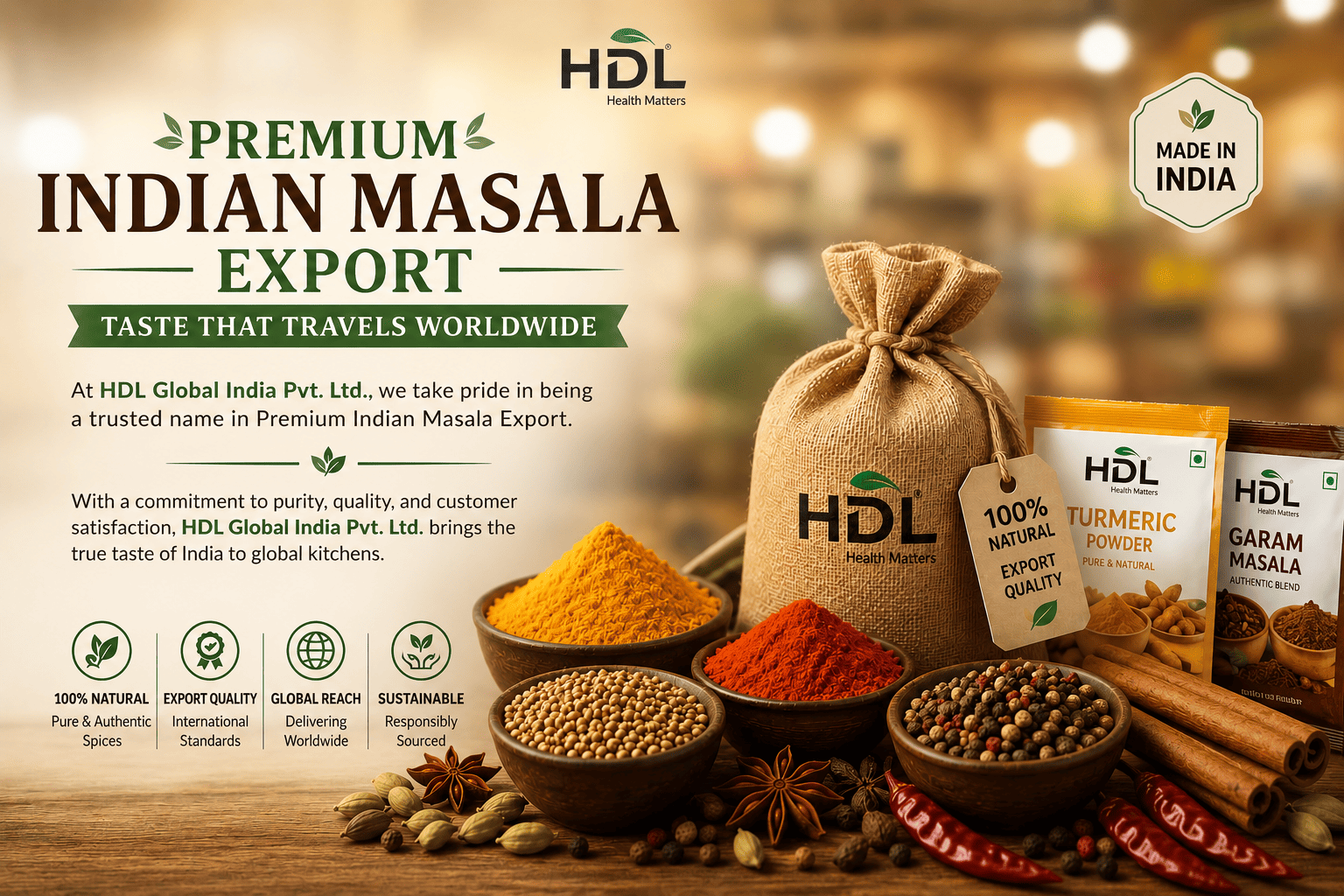
Introduction: India’s Spices Are Conquering the World
India has long been called the “Land of Spices.” This is not just a poetic title. It is a well-earned reputation built over thousands of years. From the ancient Silk Route to the modern global supply chain, Indian spices have always found their way to distant shores. Today, Premium Indian masala export is a thriving industry that connects India’s rich agricultural heritage with kitchens and food businesses across six continents.
Whether you are a restaurant owner in London, a food manufacturer in Dubai, or a home cook in New York, you have likely tasted the magic of Indian spices. But have you ever wondered where these bold flavors come from? And what makes Indian spices stand apart from those grown anywhere else in the world? This blog explores those questions and more.
Why Indian Spices Are Truly One of a Kind
India grows more than 50 varieties of spices. This represents the largest range of spice cultivation in the world. The secret lies in India’s extraordinary diversity of climate zones, soil types, and traditional farming practices. Each region contributes something unique. For example:
- Kerala is famous for black pepper, cardamom, and cloves.
- Rajasthan produces robust dried red chilies and cumin.
- Gujarat is known for sesame, fennel, and fenugreek.
- Tamil Nadu and Karnataka are top producers of turmeric and coriander.
This regional richness means that pure and natural Indian spices carry flavors, aromas, and colors that are simply impossible to replicate elsewhere. The combination of volcanic soil, monsoon rainfall, and centuries-old cultivation wisdom gives each spice its signature character.
The Growing Global Demand for Indian Masala
Consumer preferences worldwide are shifting fast. People are moving away from artificial flavors and synthetic food additives.They want food that is not just delicious but also wholesome and responsibly sourced.
This shift is driving enormous demand for Premium Indian masala export products. According to industry data, India exports spices and spice products worth billions of dollars every year. The top importing countries include the United States, the United Arab Emirates, the United Kingdom, Bangladesh, Malaysia, and Germany. The demand is growing year on year, and it shows no sign of slowing down.
Food manufacturers, restaurant chains, and specialty grocery brands are all actively seeking Indian spice suppliers global networks depend on. They need suppliers who can deliver consistent quality, reliable volumes, and full documentation for regulatory compliance.
What Makes a Reliable Indian Spice Exporter?
Not all spice exporters are created equal. When buying Indian masala on a global scale, quality assurance is everything. Here is what separates a trustworthy exporter from the rest:
1. Sourcing Directly from Farmers
The best exporters work directly with farming communities. This ensures fresher produce, better quality control, and fair prices for the growers. It also shortens the supply chain, which reduces the risk of contamination or adulteration.
2. Strict Quality Testing
Reputable Indian spice suppliers global buyers trust always invest in laboratory-grade quality testing. This includes checks for moisture content, essential oil levels, microbial contamination, pesticide residue, and heavy metal traces. Every batch should come with a full quality report.
3. International Certifications
Certified exporters follow standards such as ISO, FSSAI, HACCP, GMP, and APEDA guidelines. These certifications are not just badges. They represent a commitment to food safety, hygiene, and consistency.
4. Hygienic Processing and Packaging
Proper cleaning, drying, grinding, and packaging in sterile environments are non-negotiable. Spices are sensitive products. Any lapse in hygiene can compromise their aroma, color, and shelf life.
5. Transparent Documentation
Exporters must provide accurate documentation including certificates of origin, phytosanitary certificates, certificates of analysis, and customs compliance paperwork. This is critical for smooth import clearance in regulated markets like the EU, the USA, and the UK.
Organic Indian Spices: The New Gold Standard
One of the fastest-growing segments in the global spice market is organic spices. Consumers and food businesses alike are demanding products that are grown without synthetic pesticides or chemical fertilizers. This is where Organic Indian spices export is making a massive impact.
India is one of the world’s leading producers of certified organic spices. Many small and medium farmers across states like Sikkim, Uttarakhand, Kerala, and Madhya Pradesh are now following certified organic practices. These farms produce Organic Indian spices export products that meet the strict standards of markets in Europe, North America, and Australia.
Organic spices offer several advantages:
- Better aroma and taste: Without chemical interference, the natural essential oils in spices remain intact and more potent.
- Healthier for consumers: No harmful residue means safer food for everyone in the supply chain.
- Environmentally responsible: Organic farming protects soil health, water quality, and biodiversity.
- Premium pricing: Organic certified products command higher prices in international markets, benefiting both the exporter and the farming community.
If your business caters to health-conscious consumers, sourcing Organic Indian spices export products is a smart and strategic move.
Pure and Natural: The Philosophy Behind Indian Masala
At the heart of every great spice blend is a simple truth. Purity matters. Pure and natural Indian spices are not just a marketing claim. They are the result of careful cultivation, responsible harvesting, and honest processing.
Adulteration is a real issue in the global spice trade. Some suppliers mix lower-quality filler materials with premium spices to reduce costs. This harms consumers, damages brand reputations, and undermines trust in the entire category. Ethical Indian exporters reject this practice entirely.
When you source pure and natural Indian spices, you are getting:
- Full-strength flavor and aroma in every gram
- Vibrant natural color derived solely from the spice itself
- Complete nutritional and medicinal benefits intact
- A product your customers can trust and enjoy
This commitment to purity is what makes Premium Indian masala export a mark of excellence recognized around the world.
Popular Hdl Spices in Global Demand
Let us look at some of the most sought-after Indian spices in the international market right now:
1.Asafoetida (Hing)-A Divine Flavour
Asafoetida, known in India as Hing, is a dried latex gum extracted from the roots of the Ferula plant and is one of the most uniquely powerful spices in Indian cooking. Despite its intensely pungent raw smell, it transforms into a smooth, savory, onion-garlic-like flavour when cooked in hot oil or ghee, making it absolutely irreplaceable in Indian cuisine. It is an essential ingredient in dals, sambhar, pickles, and vegetarian curries, and serves as a perfect substitute for onion and garlic in Jain and Brahmin cooking traditions.
2.Carom Seeds (Ajwain):
Carom seeds, known in India as Ajwain, are small oval-shaped seeds with an intensely sharp, hot, and thyme-like aroma, because they contain up to 50% thymol in their essential oil — one of the highest concentrations found in any spice in the world. They are grown primarily in Rajasthan and Gujarat, where the dry, sandy climate produces seeds with the strongest aroma and highest medicinal potency, and India is the world’s largest producer and exporter of this powerful spice.
3.Black Cumin (Kala Jeera) :
Black cumin, known in India as Kala Jeera or Shah Jeera (Royal Cumin), is a rare and premium spice entirely different from regular cumin, with smaller, darker seeds and a far more complex, sweet, and subtle aroma that made it a prized ingredient in royal Mughal cuisine for centuries. It grows only in very specific high-altitude, cold climates and is primarily cultivated in the Kashmir valley, where the unique mountain environment produces seeds with an exceptional essential oil profile and aroma unmatched anywhere else in the world.
4.Chaat Masala :India’s Most Exciting Spice Blend
Chaat masala is not a single spice but a bold, complex, and iconic Indian spice blend that delivers a simultaneous burst of tangy, spicy, salty, and slightly sweet flavours — a combination so irresistible that the word “chaat” in Hindi literally means “to lick.” It originated in the vibrant street food culture of North India, particularly in Delhi, Uttar Pradesh, and Punjab, where generations of street vendors (chaatwalas) refined their own signature recipes using a base of amchur, black salt, cumin, black pepper, dry ginger, coriander, and dried mint leaves. It is sprinkled generously over fruit chaat, papdi chaat, samosas, pakoras, pani puri, tikki, roasted corn, grilled paneer, and even fresh salads and drinks to instantly elevate any dish with its signature punchy flavour.
Faqs:
1. What makes Indian masala ideal for export?
Indian masala is known for its rich aroma, strong flavor, and natural cultivation methods, making it highly preferred in global markets.
2. Which spices are most exported from India?
Popular exports include turmeric, cumin, coriander, chili powder, cardamom, and garam masala blends.
3. Are Indian spices suitable for international food businesses?
Yes, Indian spices meet global quality standards and are widely used by restaurants, food manufacturers, and retailers worldwide.
4. What is the demand for Indian spices globally?
The demand is rapidly growing due to increased interest in natural, organic, and flavorful ingredients across international cuisines.
5. Do Indian spice exporters provide bulk supply?
Yes, most exporters offer bulk and wholesale supply options for global buyers.
Conclusion
The story of Premium Indian masala export is ultimately a story of heritage meeting ambition. It is about farmers who tend their crops with devotion, processors who handle each spice with care, and exporters who carry India’s culinary legacy to every corner of the world.
When you choose Indian spice suppliers global food industries trust, you are not just buying a commodity. You are investing in quality, tradition, and the authentic taste of India. Whether you are sourcing Organic Indian spices export products for a health-food brand or bulk pure and natural Indian spices for a large food manufacturer, India has everything you need and more.