
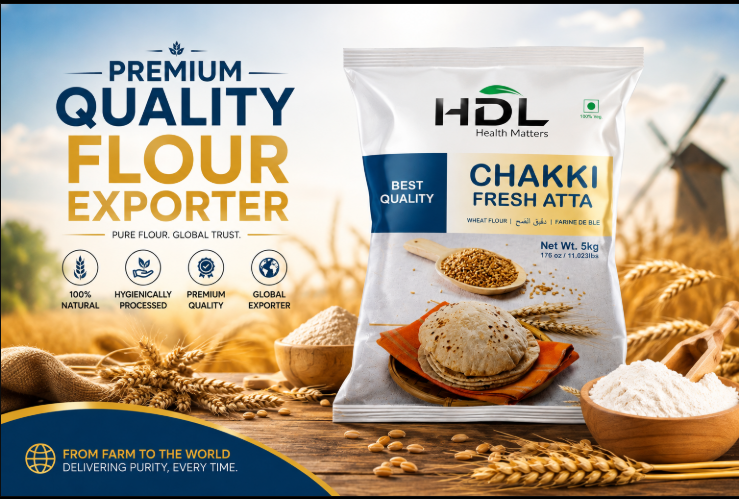
India is one of the world’s leading agricultural producers, offering a wide range of food ingredients to international markets. Among these products, flour is an important staple used by households, bakeries, restaurants, food manufacturers, and commercial kitchens. With access to quality grains, modern processing facilities, and established supply chains, an experienced Indian Food Exporter can provide flour products that meet the requirements of buyers in different countries.
As global demand for Indian food products continues to grow, businesses are looking for reliable suppliers who can offer consistent quality, competitive pricing, proper packaging, and dependable export services. Flour exporters from India serve this growing demand by supplying different types of flour for retail, wholesale, foodservice, and industrial applications.
Why Choose a Flour Exporter from India?
India has a strong agricultural base and a well-developed food-processing industry. This gives Indian suppliers access to a wide range of grains and raw materials required for flour production.
Working with a flour exporter from India can provide several advantages:
- Wide selection of flour products
- Competitive sourcing and pricing
- Bulk and wholesale order support
- Export-friendly documentation
- Quality-focused processing
- International shipping support
Indian exporters also understand the importance of maintaining product quality throughout the supply chain. From grain selection and milling to packaging and shipment, every stage can influence the final quality of flour.
Types of Flour Available from India
A professional flour exporter can offer different products based on the needs of international buyers. The exact range depends on the supplier, production facilities, and destination market.
Wheat Flour
Wheat flour is one of the most widely traded flour products. It is commonly used for making bread, chapati, roti, naan, biscuits, pastries, and other bakery products.
Indian wheat flour can be supplied to wholesalers, distributors, food manufacturers, restaurants, supermarkets, and other commercial buyers. Depending on the application, buyers may require different levels of fineness and specifications.
Whole Wheat Flour
Whole wheat flour contains the main components of the wheat grain and is commonly used for traditional Indian foods and health-focused food products. It is suitable for roti, chapati, flatbreads, bakery products, and various food preparations.
Demand for whole wheat products is increasing in several markets because consumers are paying greater attention to traditional grains and minimally processed food options.
Maida
Maida is a refined wheat flour widely used in Indian cuisine and bakery applications. It is commonly used for naan, bhatura, biscuits, cakes, pastries, noodles, and other products.
International buyers who serve Indian communities or operate Indian restaurants often source maida from Indian suppliers because it is an important ingredient in many traditional recipes.
Besan
Besan, also known as gram flour or chickpea flour, is produced from chickpeas and is an important ingredient in Indian cooking. It is used to prepare snacks, batters, sweets, curries, and other traditional foods.
Besan is also becoming popular outside India as consumers explore plant-based ingredients and alternative flours.
Rice flour is another important flour product used in Indian and international food preparation. It can be used in snacks, traditional dishes, bakery products, batters, and gluten-free recipes.
A reliable exporter can supply rice flour according to buyer requirements, including different packaging formats and quantities.
Quality Is Important in International Flour Supply
When purchasing flour internationally, buyers generally look beyond price. Product consistency, cleanliness, packaging, shelf life, documentation, and delivery reliability are also important.
A professional flour exporter from India should maintain quality controls throughout the production and packing process. Proper grain selection and controlled milling can help maintain consistent texture and product characteristics.
Packaging is equally important. Flour needs to be protected from moisture, contamination, and handling damage during transportation. Export packaging can be selected according to the buyer’s requirements, destination, quantity, and distribution channel.
For bulk buyers, larger commercial packaging can be suitable, while retailers may require consumer-friendly packs with appropriate labeling.
Indian Flour for Global Food Markets
Indian food has a strong presence in international markets. Communities, restaurants, grocery stores, and food businesses across different regions increasingly seek authentic Indian ingredients. This growing interest continues to support the demand for Indian food products worldwide.
The broader growth of Indian grocery exports includes staples, grains, spices, pulses, ready-to-cook products, snacks, and other food ingredients. Indian flour also contributes to this growing export segment and serves both household consumers and commercial food businesses.
Consumers use flour for everyday cooking, while restaurants, bakeries, and food manufacturers rely on it for commercial food preparation. International buyers can source Indian flour alongside other Indian food products, helping them build a diverse and reliable product portfolio.
Supporting Indian Food Export Requirements
A successful export business requires more than producing a quality product. Exporters must also understand international trade requirements, documentation, packaging standards, shipping processes, and destination-market expectations.
An experienced Indian Food Exporter can help international buyers manage the sourcing process more efficiently. Depending on the destination and product, export documentation may include commercial invoices, packing lists, shipping documents, certificates, and other required paperwork.
Buyers should always confirm the specific import regulations of their destination country before placing an order. Requirements can vary depending on the product category, country, packaging, labeling, and intended use.
Flour and Other Indian Food Products
International buyers often prefer suppliers that can provide multiple food categories instead of sourcing every product from a different company.
India has a large food-export ecosystem covering grains, flour, pulses, spices, and other agricultural products. In addition to flour, buyers can explore Indian Spices exports for products used in traditional Indian cooking and international food manufacturing.
Similarly, Indian Pulses exports are an important part of India’s agricultural trade. Pulses such as chickpeas, lentils, and other varieties are widely used in Indian cuisine and have growing demand among international consumers.
By sourcing several products from an experienced Indian supplier, buyers may simplify procurement and develop a more diverse Indian food product range.
Benefits of Sourcing Directly from India
Direct sourcing can give international buyers greater control over product selection, packaging, quantities, and supply planning.
Some key advantages include:
Competitive Pricing
India’s agricultural production and established processing industry can provide competitive sourcing opportunities for international buyers. Pricing will depend on product type, quantity, specifications, packaging, freight, and market conditions.
Product Variety
Indian suppliers can offer a wide selection of flour and related food products. This makes India an attractive sourcing destination for importers looking to expand their food portfolio.
Flexible Order Quantities
Depending on the supplier and production capacity, buyers may be able to order different quantities for wholesale, distribution, retail, or foodservice requirements.
Export Experience
Experienced exporters understand the importance of documentation, packaging, shipment coordination, and communication with international customers.
Growing Global Demand
The popularity of Indian cuisine continues to support demand for authentic ingredients in international markets. This creates opportunities for importers, distributors, retailers, and foodservice businesses.
How to Choose the Right Flour Exporter from India
Choosing the right supplier is an important step for international buyers. Before placing a large order, buyers should evaluate several factors.
Check Product Quality
Ask for product specifications and understand the flour’s intended application. Depending on the market, buyers may have specific requirements related to texture, processing, packaging, shelf life, and other characteristics.
Review Packaging Options
Confirm whether the exporter can provide packaging suitable for international transportation and the destination market. Packaging should protect the flour throughout handling, storage, and shipping.
Discuss Order Requirements
Clearly communicate the required product, quantity, packaging size, delivery destination, and expected shipment schedule.
Confirm Export Documentation
Ask the supplier which export documents they can provide and check whether additional documentation is required by the destination country.
Evaluate Communication
Clear and timely communication is essential for international business. A dependable exporter should be able to answer questions about products, pricing, packaging, shipping, and order processing.
Flour Export for Retail and Foodservice
The international flour market includes both retail and commercial buyers. Retailers may require smaller consumer packs with appropriate product information, while restaurants, bakeries, and food manufacturers generally need larger quantities.
For Indian grocery stores, flour is often an essential staple alongside rice, pulses, spices, snacks, and other traditional food products. This makes flour a valuable addition to an Indian food distribution portfolio.
Foodservice businesses can also benefit from dependable flour supplies because consistency is important when preparing products repeatedly. Bakeries and food manufacturers may have specific requirements based on their recipes and production processes.
The Role of International Food Exports
The growth of international food exports has created more opportunities for Indian agricultural and food-processing businesses. Global buyers are increasingly interested in sourcing authentic ingredients from established food-producing countries.
India’s diverse agricultural production provides a strong foundation for this trade. Flour, pulses, spices, grains, and other food products can serve different market segments around the world.
For importers, choosing a supplier with export experience can make international sourcing more organized. Buyers can discuss product requirements, packaging, shipping schedules, and documentation before confirming an order.
Sustainable and Reliable Food Sourcing
Modern food buyers are increasingly interested in reliable and responsible supply chains. Consistent sourcing, efficient processing, appropriate packaging, and careful logistics can all contribute to a dependable export operation.
For exporters, maintaining long-term relationships with buyers is often more valuable than focusing only on individual shipments. Consistent product quality, professional communication, and dependable service can help create repeat business in international markets.
Why Indian Flour Has Global Potential
India’s strong agricultural production, established food-processing sector, and diverse culinary traditions give Indian flour products significant international potential.
From wheat flour and whole wheat flour to besan and rice flour, Indian suppliers can serve different food applications and buyer requirements. The growing international interest in Indian cuisine further supports demand for authentic ingredients.
When combined with categories such as Indian grocery exports, Indian Spices exports, and Indian Pulses exports, flour can form an important part of a broader Indian food product portfolio.
FAQ’s :
India has a strong agricultural and food-processing industry, making it a reliable source for wheat flour, whole wheat flour, besan, rice flour, and other food products.
Commonly exported flour products include wheat flour, whole wheat flour, maida, besan (gram flour), and rice flour. Availability may vary by exporter.
Yes. Indian flour exporters commonly supply bulk quantities to importers, wholesalers, distributors, restaurants, bakeries, food manufacturers, and retail businesses.
Flour can be packed according to product requirements, order quantity, transportation needs, and destination-market requirements. Buyers can discuss suitable packaging options with the exporter.
Consider product quality, available flour varieties, packaging options, export experience, documentation support, communication, order capacity, and ability to meet your destination-market requirements.
Yes. Indian flour can be used in restaurants, bakeries, food manufacturing, retail, foodservice, and traditional Indian food businesses, depending on the product specification.
Conclusion
Choosing a reliable Indian Food Exporter can help international buyers source quality flour while managing packaging, documentation, shipping, and supply requirements more efficiently. India’s agricultural resources and established food-export industry make it a strong sourcing destination for flour and other food products.
Whether you are an importer, distributor, wholesaler, supermarket, restaurant, bakery, or food manufacturer, sourcing flour from India can provide access to a wide range of products and flexible supply options.
With growing demand for Indian ingredients and increasing opportunities in international food exports, Indian flour continues to have strong potential in global food markets. The right exporter can become a valuable long-term sourcing partner by providing consistent products, dependable service, and export support tailored to international buyers.