
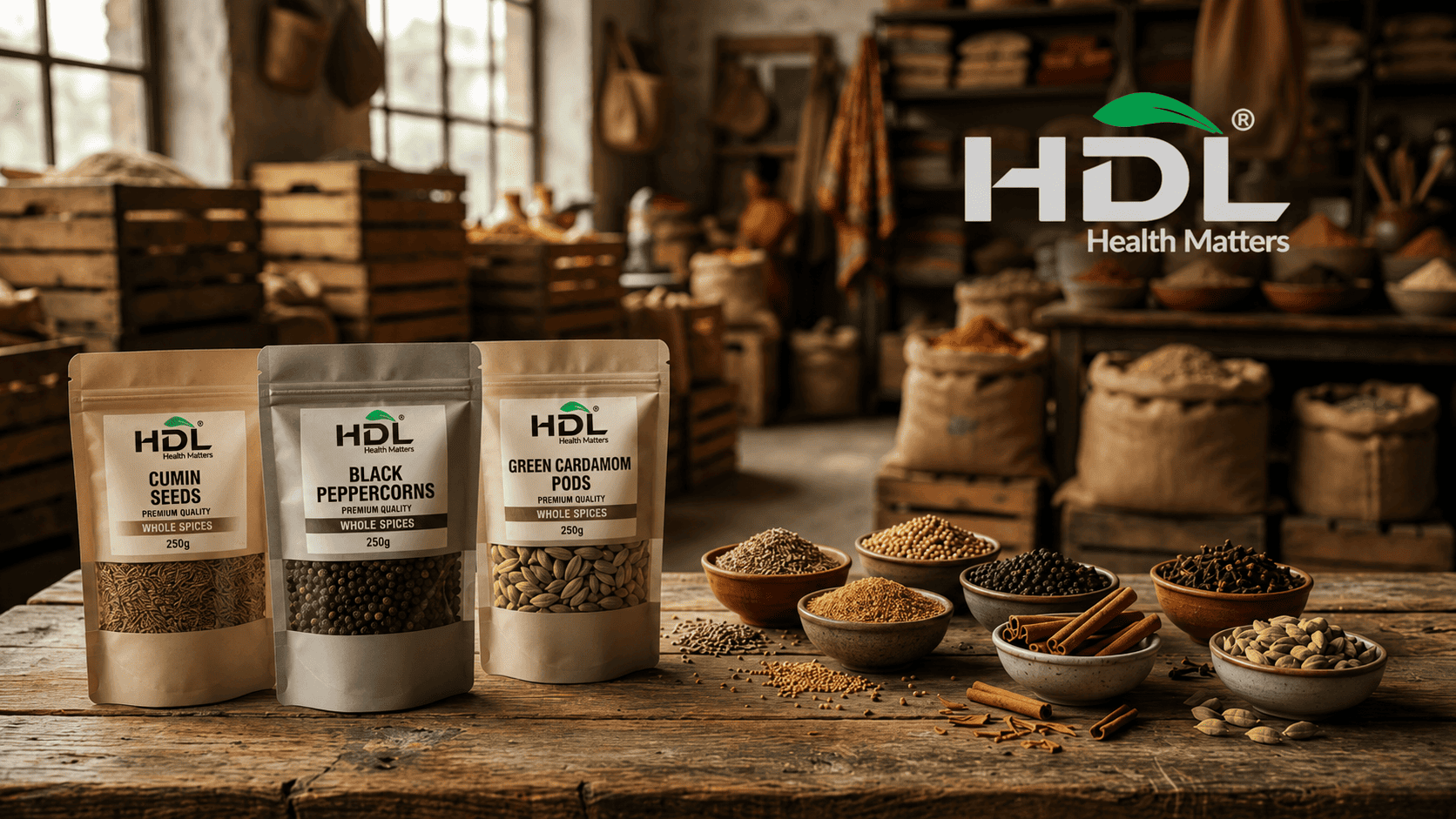
A Practical Sourcing Guide for Retail Buyers
Introduction
Ethnic food categories have become one of the fastest-growing segments in modern grocery retail. Supermarkets serving multicultural communities increasingly expand their shelves with authentic cooking ingredients sourced from global markets.
Among these products, whole spices remain essential pantry staples across South Asian, Middle Eastern, and African cuisines. Ethnic supermarkets often maintain dedicated spice sections because these products generate steady repeat purchases.
According to the Food and Agriculture Organization (FAO), global food trade connects agricultural producers with international markets that rely on imports for diverse food ingredients and culinary traditions. Within this trade network, India plays a major role in supplying spices to global grocery markets. For supermarkets exploring new product opportunities, private label whole spices packaged in stand-up pouches offer a practical entry point into the ethnic food category.
Why Whole Spices Remain Essential in Ethnic Grocery Retail
Whole spices continue to play a central role in traditional cooking practices. Unlike pre-ground seasonings, whole spices allow consumers to control freshness and flavor during cooking.
This makes them particularly important in households that prepare traditional meals regularly.
Common whole spices found in ethnic supermarkets include:
| Spice | Typical Culinary Use |
|---|---|
| Cumin Seeds | Curries, rice dishes, spice blends |
| Coriander Seeds | Marinades, spice powders |
| Black Pepper | Universal seasoning |
| Mustard Seeds | Pickling and tempering |
| Cloves | Aromatic rice dishes |
| Cinnamon Sticks | Sweet and savory cooking |
| Cardamom | Desserts and beverages |
India produces more than 200 varieties of spices and remains the largest global producer and exporter of spice products according to the Spices Board of India. Because of this agricultural diversity, Indian exporters supply supermarkets, distributors, and food manufacturers across international markets.
Why Stand-Up Pouches Work Well for Private Label Spice Retail
Packaging format influences both retail presentation and supply chain efficiency. Stand-up pouches have become one of the most widely used packaging formats for private label spices.
Stand-up pouches offer a practical combination of product protection, visual appeal, and cost efficiency. For private label programs, they allow retailers to launch spice products quickly without investing in complex packaging formats
Several practical factors explain this trend:
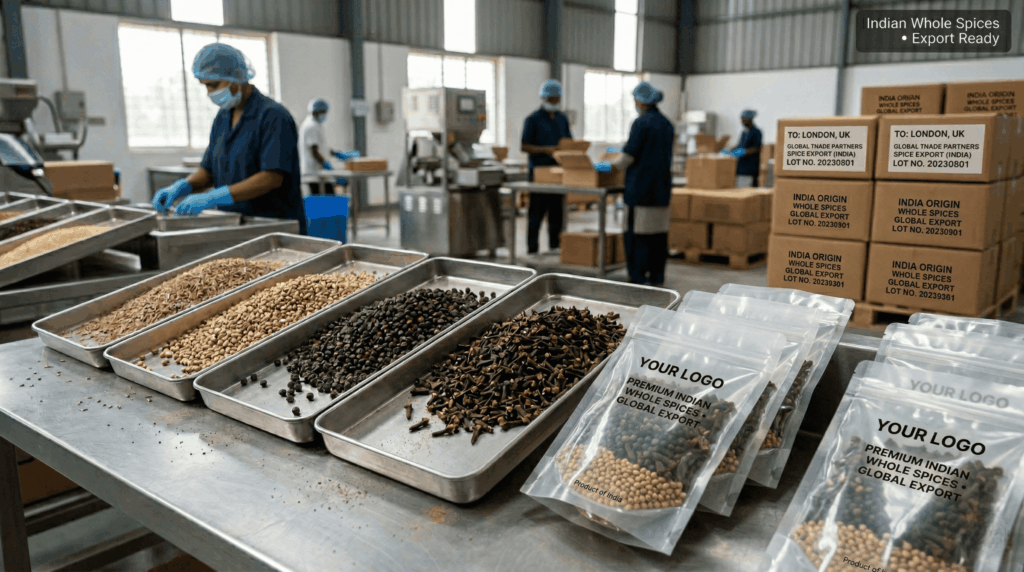
Efficient Storage
Flexible pouches require less storage space compared with rigid containers, making them convenient for supermarkets and distributors.
Their compact structure allows retailers to stock multiple spice varieties in limited shelf space. This is particularly beneficial for ethnic supermarkets that offer a large assortment of spices and ingredients.
Lower Transportation Weight
Lightweight packaging reduces shipping costs during international transportation. Compared with glass or rigid plastic containers, pouches help reduce overall shipment weight and packaging material usage. This can improve container loading efficiency and reduce logistics costs for exporters and distributors.
Freshness Protection
Modern laminated pouch materials protect spices from moisture and external contaminants. Barrier layers help preserve aroma, color, and flavor, which are essential quality attributes for spices. Proper packaging also helps maintain product stability during long-distance export distribution.
Because of these advantages, stand-up pouches are widely used in ethnic grocery stores and specialty food retailers. Retailers also prefer this format because it supports both small trial packs and larger family-size packaging, allowing them to serve different customer needs.
Shelf Visibility
Stand-up pouches stand upright, helping retailers maintain neat and visually appealing shelf layouts.
The vertical structure also enhances brand visibility and improves product recognition.
Key Whole Spices Suitable for Private Label Pouch Packaging
Ethnic supermarkets typically begin their spice range with essential whole spices that support traditional cooking. These staple spices are commonly used across many regional cuisines, making them reliable products for private label programs. Their consistent demand helps retailers maintain steady shelf turnover.

Cumin Seeds
Cumin seeds are widely used in Indian, Middle Eastern, and Mexican cuisines. They add warm earthy flavor to rice dishes, lentils, curries, and spice blends.
In spice trade, cumin is valued for its distinctive aroma and consistent demand across traditional cooking cultures.

Coriander Seeds
Coriander seeds provide mild citrus-like flavor and are frequently used in spice blends and seasoning mixes.
They are commonly used in pickling, marinades, and curry bases, making them an essential ingredient in many regional cuisines.

Black Pepper
Black pepper is one of the most globally consumed spices and a key ingredient in many spice blends.
Its sharp, pungent flavor enhances soups, sauces, marinades, and seasoning mixtures used across international cuisines.

Mustard Seeds
Mustard seeds are widely used in pickling and traditional seasoning preparations across South Asian cuisines.
When heated in oil, they release nutty flavors that enhance curries, vegetables, and chutney recipes.

Cloves
Cloves provide strong aromatic flavor and are commonly used in spice blends, rice dishes, and marinades.
Their warm fragrance makes them a popular ingredient in both sweet and savory cooking traditions.

Cinnamon Sticks
Cinnamon sticks add sweet woody aroma and flavor to beverages, desserts, and savory dishes.
They are widely used in spice blends, tea infusions, and traditional cooking preparations.
Retailers often start with these core spices before expanding into spice blends, ground spices, and specialty seasonings. Additional product categories within Indian grocery exports can often be explored through supplier catalogs such as Indian Food Products.
Why Ethnic Supermarkets Are the Ideal Retail Channel
Ethnic supermarkets serve communities where traditional cooking remains part of daily life. As a result, demand for whole spices remains consistent throughout the year. These stores often stock a wide variety of spices because customers rely on them for authentic ingredients used in everyday recipes.
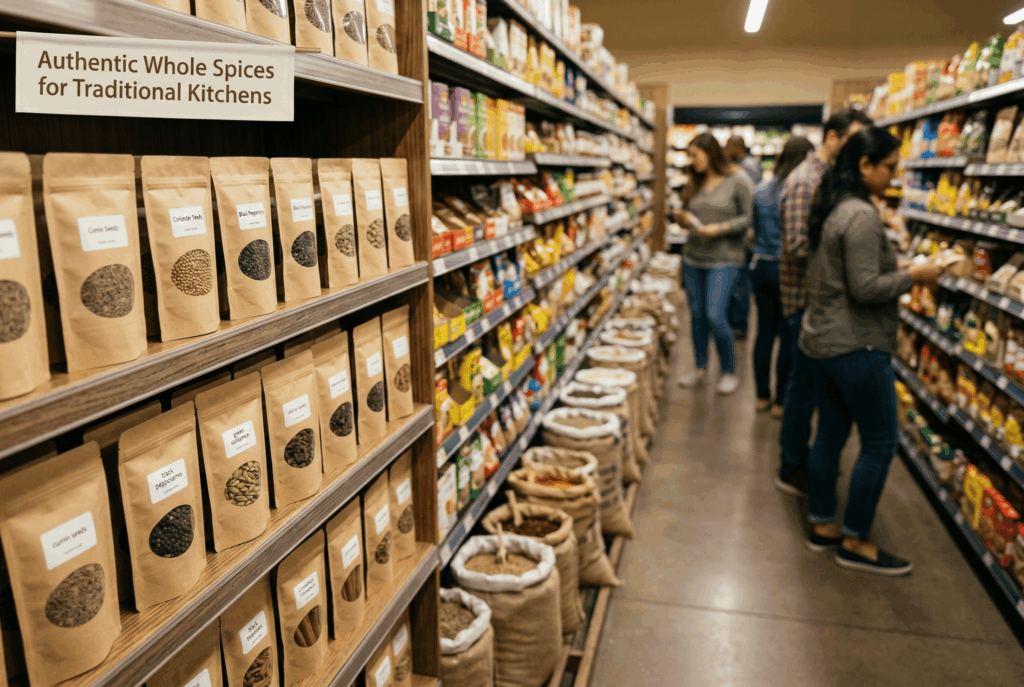
Cultural Cooking Habits
Many households regularly cook dishes that require whole spices. Traditional cooking methods often involve roasting or tempering whole spices to release flavor. This keeps demand strong in communities that follow heritage recipes.
Repeat Purchase Behavior
Spices are staple pantry ingredients that must be replenished periodically.Even though spices are used in small quantities, they are purchased repeatedly over time. This creates consistent sales cycles for grocery retailers.
Expanding Consumer Interest
Non-ethnic consumers increasingly experiment with global cuisines, increasing demand for authentic ingredients. Cooking shows, food blogs, and restaurant trends have introduced many consumers to spices used in international cuisines. As a result, ethnic supermarkets are attracting a broader customer base. Market insights about international grocery distribution can also be explored through resources such as Global Indian Grocery Export Trends.
How Supermarket Buyers Evaluate Private Label Spice Suppliers
Retail buyers typically assess several operational criteria when selecting suppliers.
| Evaluation Factor | Why It Matters |
|---|---|
| Product quality consistency | Ensures reliable flavor and shelf life |
| Packaging capability | Important for retail presentation |
| Export experience | Reduces supply chain disruptions |
| Compliance standards | Required for international food trade |
| Communication | Facilitates long-term partnerships |
International food products must comply with safety standards established through global frameworks such as the Codex Alimentarius system developed by FAO and WHO. These standards influence food safety regulations in many importing countries.
Example Private Label Whole Spice Range for Ethnic Supermarkets
Many supermarkets begin their private label spice program with a focused selection of widely used spices.
| Product | Category Role |
|---|---|
| Cumin Seeds | High-rotation everyday spice |
| Coriander Seeds | Base ingredient for many recipes |
| Black Pepper | Universal seasoning |
| Mustard Seeds | Traditional cooking spice |
| Cloves | Aromatic specialty spice |
| Cinnamon Sticks | Dual sweet-savory ingredient |
How Ethnic Supermarkets Can Launch a Private Label Spice Line
Private label spice programs usually begin with careful product planning.
Typical steps include:
- Identify spices most commonly used by the target community
- Select packaging formats such as stand-up pouches
- Develop store-brand label design
- Coordinate sourcing through an export supplier
- Launch a limited product range before expanding
Many retailers start with five to eight spices before introducing additional categories.
Private Label Spice Supply Through Indian Export Networks
International grocery supply chains connect farmers, processors, exporters, distributors, and retailers.
Export partners operating in this network typically support retailers with:
- sourcing whole spices from agricultural regions
- cleaning, grading, and processing spices
- preparing retail packaging such as stand-up pouches
- coordinating international shipping and documentation
Companies involved in Indian grocery exports often supply multiple food categories including spices, pulses, rice, and packaged grocery items.
Organizations such as HDL Food India Limited operate within this export ecosystem by coordinating spice sourcing and export supply for international grocery markets.
Businesses exploring Indian grocery sourcing can review broader trade insights through resources such as the Indian FMCG Export Guide.
Common Mistakes Supermarkets Make When Launching Spice Brands
Retailers introducing private label spice ranges sometimes face operational challenges.
Common issues include:
- launching too many products initially
- choosing suppliers without export experience
- overlooking packaging shelf presentation
- ignoring product demand within the target community
Starting with a focused product range and working with experienced exporters can help reduce these risks.
Exploring Private Label Indian Whole Spices for Ethnic Supermarkets
Ethnic supermarkets continue to expand their international food categories as demand for authentic ingredients grows. Private label spice programs provide retailers with an opportunity to develop recognizable store brands while offering essential cooking ingredients to their customers. Retailers exploring this opportunity often begin by evaluating product selection, packaging formats, and supplier capabilities.
Discussions typically focus on:
- spice product range
- stand-up pouch packaging formats
- export coordination and logistics
- long-term product supply
These early conversations help supermarkets determine how a private label spice range could fit into their grocery category strategy.
Key Takeaways
- Whole spices remain essential products in ethnic grocery retail.
- Stand-up pouches provide efficient packaging for private label spice programs.
- Indian exporters supply diverse spice varieties to global markets.
- Ethnic supermarkets maintain steady demand for authentic cooking ingredients.
- Private label spice lines help retailers strengthen store-brand identity.
FAQ’s
Private label spices are spices sold under a retailer’s brand rather than a national brand.
Retailers launch private label products to improve margins and create store-brand recognition.
India produces a wide variety of spices and maintains large agricultural export infrastructure.
Stand-up pouches provide lightweight packaging, shelf visibility, and good freshness protection.
Buyers typically evaluate product quality, packaging capability, export reliability, and compliance standards.
Yes. Many retailers begin with a small set of essential spices before expanding their product line.